Emergency Preparedness & Response

Being that Louisiana is a high-risk state for emergency events and disasters, the Louisiana Department of Health actively partners with the Governor’s Office and the Governor’s Office of Homeland Security and Emergency Preparedness to provide up-to-date safety information and preparedness resources to Louisiana residents before, during and after times of crisis. 

Disasters and other traumatic events do more than just damage homes, businesses and communities. Small and large-scale events can have lasting emotional and psychological effects on Louisiana residents. For this reason, the Louisiana Department of Health advocates for and provides support to those in need as a result of an emergency, disaster or crisis.

In the event of a disaster, seniors and individuals with disabilities may need added assistance. Additionally, disasters can take a hefty toll on mental and emotional health - before, during and after.

LDH Programs and Resources

Bureau of Community Preparedness

The Bureau of Community Preparedness (BCP) uses an all-hazards approach to integrate state and local public health jurisdictions for response to public health threats.

Safe Drinking Water Emergency Response

 LDH's Safe Drinking Water Program ensures public safety from potential water contamination.

Heat-Related Illnesses: Data Dashboard and Guidance

Find guidance for preventing heat-related illness (HRI) and view the HRI Data Dashboard.

Disaster Supplemental Nutrition Assistance Program (D-SNAP)

D-SNAP provides eligible low-to-moderate-income households who do not normally receive SNAP benefits with help buying groceries due to lost income or damages following a disaster.

Louisiana 988

Need emergency emotional support? Call, text, or chat online to connect to a Louisiana 988 specialist who can provide free, confidential support.

Local and National Resources

Emergency Preparedness Tips

Ahead of time, prepare:

  • Keep your prescriptions up to date.
  • Refill your medications as early as possible.
  • Ask your doctor for a copy of your current labs and an extra paper copy of all your prescriptions.
  • Prepare a list of important phone numbers:
    • Your medical providers
    • Your insurance
    • Your case manager
  • Make a list of pharmacies in your network and print it if you can.
  • At the beginning of hurricane season, contact your case manager for updated emergency preparedness information.

When you evacuate, take:

  • All your medications in their original bottles
  • An extra paper copy of all of your prescriptions
  • Copies of your medical information
  • Important phone number list
  • Doctor & clinic name & contact information
  • Insurance cards
  • Medical equipment and devices (such as dentures, crutches, prostheses, etc.)
  • Water and non-perishable food
  • Clothes, sleeping supplies, maps, cash
  • Your family members and pets

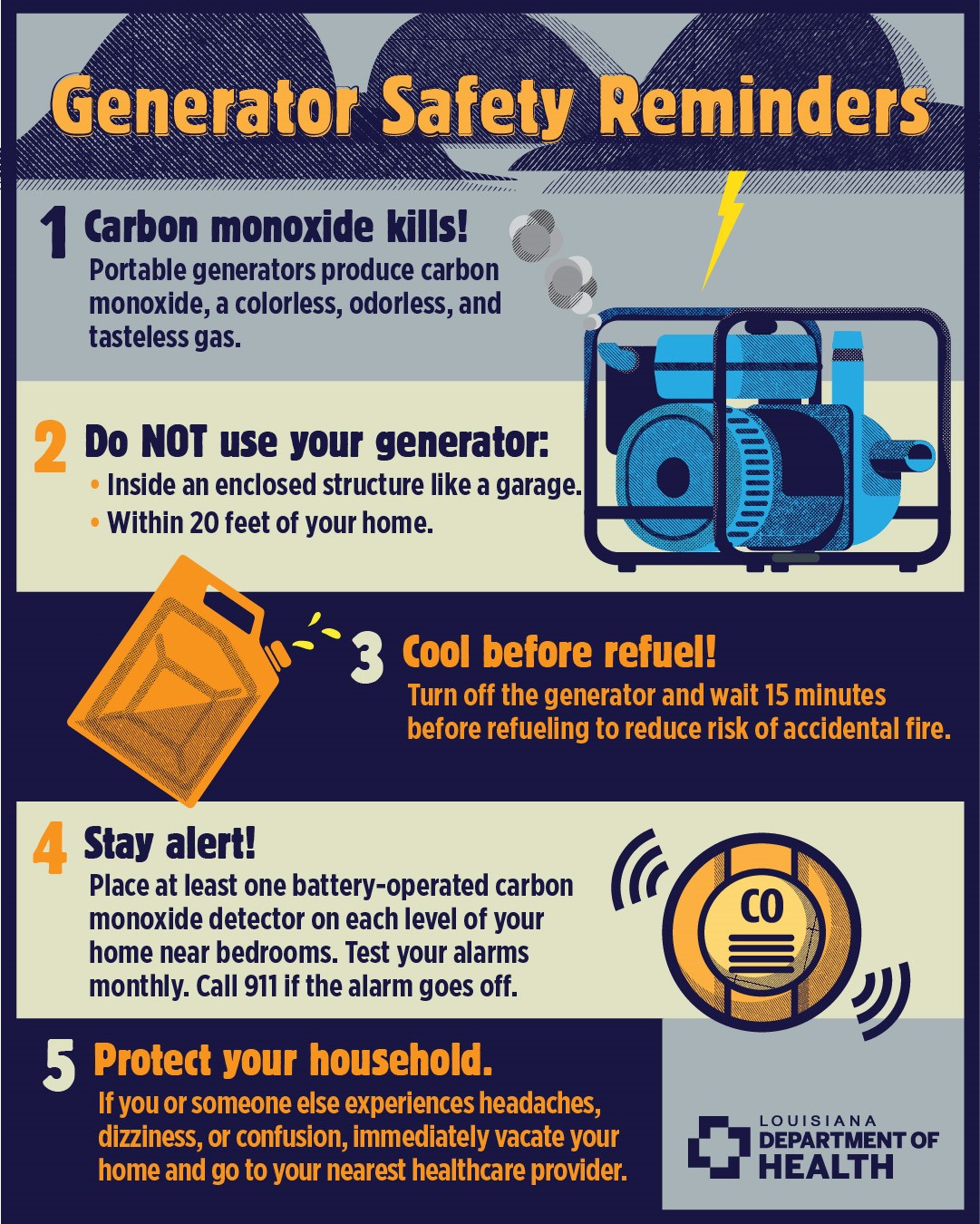
Generator and Carbon Monoxide (CO) Safety

During hurricanes or winter weather events, it's crucial to follow generator safety rules to prevent illness, injury, or death.

Frequently Asked Questions

For assistance with preparation, evacuation or relocation, call 1-866-783-5553 (toll-free) between 8 a.m to 4:30 p.m

For steps on how to put together a preparedness plan, visit https://getagameplan.org. Louisiana residents can also download the Get a Game Plan app to access emergency information on the go and prepare for potential emergencies.

The Louisiana Department of Transportation and Development operates a trip planner that Louisiana residents can use to search road closures, construction, traffic and more. Visit https://511la.org/#route to plan your evacuation routes.

To report a chemical spill or release of a toxic substance, contact one of the following organizations.

The Louisiana Department of Health Safe Drinking Water Program identifies infrastructure damage and the operating status of water utilities located in the affected areas. Information gathered is used to generate and report water outages and boil water advisories to the media, parish leaders, state agencies, the Governor’s Office of Homeland Security and Emergency Preparedness (GOHSEP), critical customers (hospitals, dialysis centers, nursing homes, etc.) and the general public. For information on emergency reporting, boil advisories and water outages, click here.
Surgeon General Evelyn Griffin, MD

Secretary Bruce D. Greenstein

Powered by Cicero Government